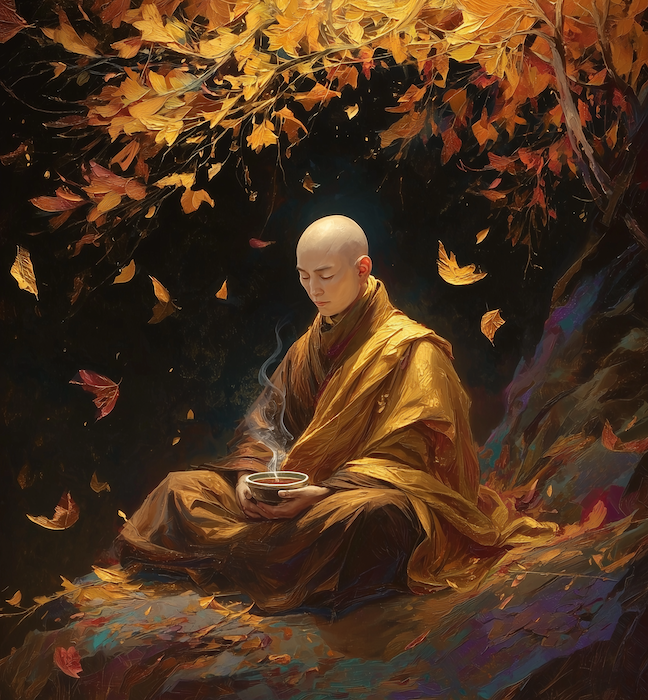
Tea and Zen
-
Tea and Zen, One Taste 禅茶一味
The famous saying Chan cha yi wei 禅茶一味 means that tea and Zen are the same (lit. Zen and tea, one taste). This illustrates the fact that Zen practice is not bound to the meditation cushion, but should necessarily be integrated into daily life: “meditation in action.” The tea ceremony can then become a vehicle for practicing Zen. The character for Zen in Chinese is Chan 禅 (禪). “Chan” is a transliteration of the Sanskrit word dhyana (jhana) which is a form of meditation that involves profound concentration and deep absorption on a singular object of meditation. The word can be broken down into dhi (mind) + yana (vehicle). The…
-
“Eating Bitter” 吃苦 in Kneeling Posture 跪坐
Chan Cha 禅茶 (Tea and Zen) practice at Wenshu Monastery advocates a kneeling posture (gui zuo 跪坐) for tea practice. This is a seated posture that can quickly become intense and uncomfortable as the legs quickly become numb. This is a form of “eating bitter” 吃苦. From a Buddhist perspective, this disciplines the practitioner and reminds them that suffering is a part of living in the world. Continue reading (members only)…